 Free Delivery to UK Mainland
 Need Help? Call us on 01363 82293
 Low Price, High Quality
Free Delivery to
UK Mainland
Need Help?
01363 82293
Low Price,
High Quality
Welcome to the very first edition of Bee Ready.
Each month, we will take a moment to look at what is happening in the hive, what the bees are beginning to do, and the small things that can help you stay prepared as the season moves forward.
March is a real turning point. Winter has not quite let go yet, but spring is beginning to make itself known. The days are longer, the light feels different, and on the right afternoon you may hear that familiar hum again at the entrance.
It is a month of fresh starts, for the bees and for us as beekeepers too.
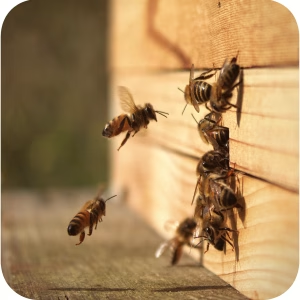
The hive begins to stir.
Even if the weather still feels chilly at times, March is often when the colony starts to wake up.
On warmer days, bees begin flying with more purpose, and you may notice them returning with the first bright flecks of pollen. Early plants such as crocus, hazel, and willow provide some of the season’s first forage, and the hive responds quickly.
Inside, the queen usually starts to increase her laying. Brood rearing begins to expand, slowly at first, then more noticeably as the month progresses.
It is not a sudden change, more of a gentle build. But once it begins, everything starts to move forward.
What matters most in March?
March is not really the month for rushing. It is more about quiet support and keeping an eye on the essentials.
One of the most important things to watch now is food.
As soon as brood rearing increases, colonies use far more energy. They are heating the nest, feeding larvae, and building again after winter. Because of that, remaining stores can disappear faster than many people expect, especially if colder weather returns.
Often, a simple check of hive weight can tell you a great deal. If a colony feels light, providing fondant or syrup at the right moment can make all the difference.
Early inspections, guided by the weather.
If March gives you a warm, calm day, it can be tempting to do a full inspection straight away. But early spring is usually better approached gently.
When temperatures rise to around fourteen degrees or above, a short look inside can provide reassurance that the colony is developing well. At this stage, it is not about searching for every detail. It is simply about confirming that brood is present, activity looks healthy, and stores are still adequate.
Keeping inspections brief is important, as brood can chill easily at this time of year. There will be plenty of opportunity for deeper checks once spring settles properly.
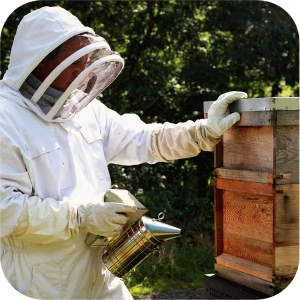
Preparing yourself as the season builds
While the bees are slowly gathering momentum, March is also a good time for beekeepers to prepare.
It is worth cleaning tools, checking spare frames, and making sure supers and foundation are ready to go. Spring has a habit of arriving all at once, and everything feels calmer when you are organised ahead of time.
March is also the month when you begin to notice which colonies are moving forward strongly, and which are taking a little longer. Some will surge ahead quickly. Others may need more patience and support.
That variation is completely normal, and paying attention now helps you make better decisions later.
A few seasonal challenges to keep in mind.
Because March sits between winter and spring, it can be one of the most unpredictable months in the beekeeping calendar.
Cold snaps can still return, and starvation remains one of the biggest risks simply because colonies are using so much more energy as brood rearing increases.
It is also worth watching for damp or ventilation issues left over from winter, as well as colonies that seem unusually quiet or slow to build.
This month is often about observation more than intervention, and small supportive actions tend to be the most valuable.
A gentle note on equipment
You do not need everything at once, but it is a good time to make sure the essentials are close at hand.
Spare frames, feeding supplies, and an extra super ready for later in spring can make the weeks ahead much smoother. A little preparation now prevents unnecessary pressure when the season accelerates.
A spring fact from the hive
Worker bees born in early spring often live much shorter lives than winter bees.
Winter bees can survive for months, but spring workers may only live around five or six weeks. The workload is intense, as they raise brood, forage, and power the colony into the active season.
It is a reminder of just how much effort goes into the hive’s seasonal restart.
Looking ahead to April
March is only the beginning.
By April, colonies expand quickly, inspections become more regular, and swarm preparation starts to matter much more.
Next month in Bee Ready, we will look at early swarm management, stronger spring inspections, and when to begin adding supers as the season gathers pace.
Stay Bee Ready this March.
March is a month of fresh starts.
Support your bees, stay steady, and let the weather guide your timing.
If you have had a chance to check your colonies this month, we would love to hear what you are seeing in your apiary.
Until next time, stay Bee Ready with Actiasbee.
And before you go, this month’s Bee Ready joke:
Why do bees have sticky hair?
Because they always use honeycombs.

Stay in the know
Actiasbee
Customer Service
My Account
Helpful Links

Stay in the know
Actiasbee
Customer Service
My Account
Helpful Links
All major debit & credit cards accepted


All major debit & credit cards accepted
